
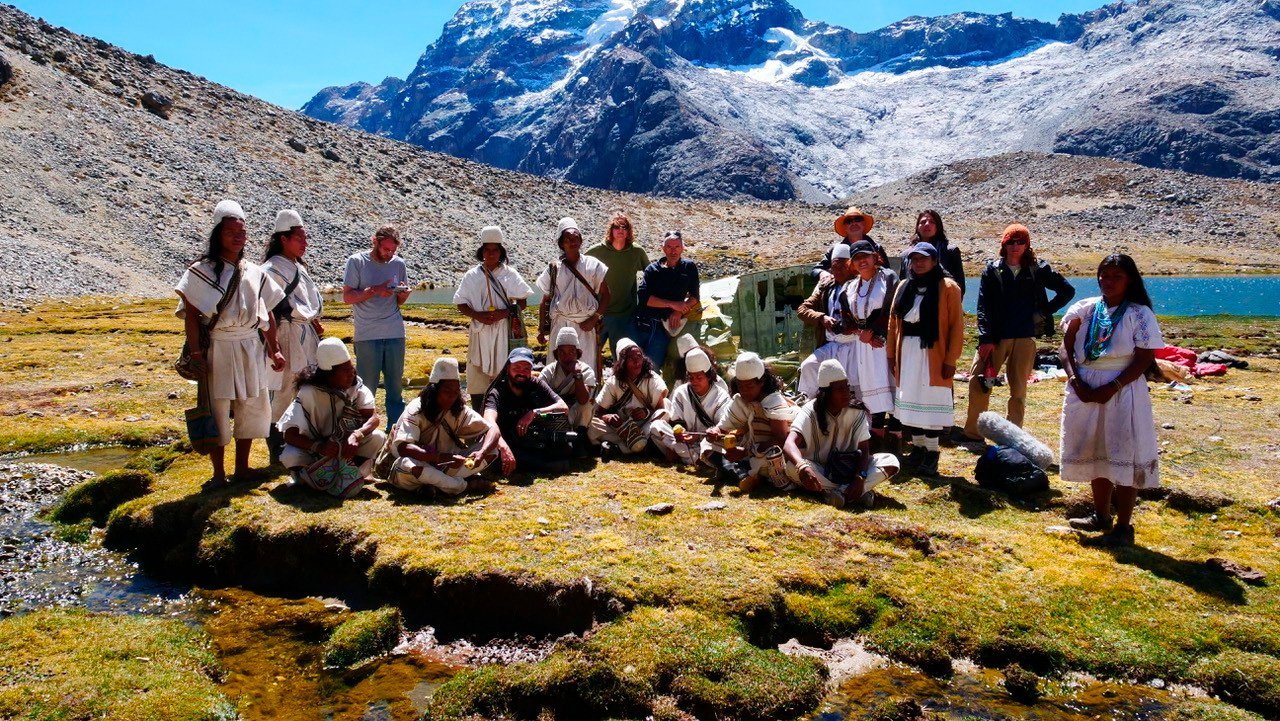
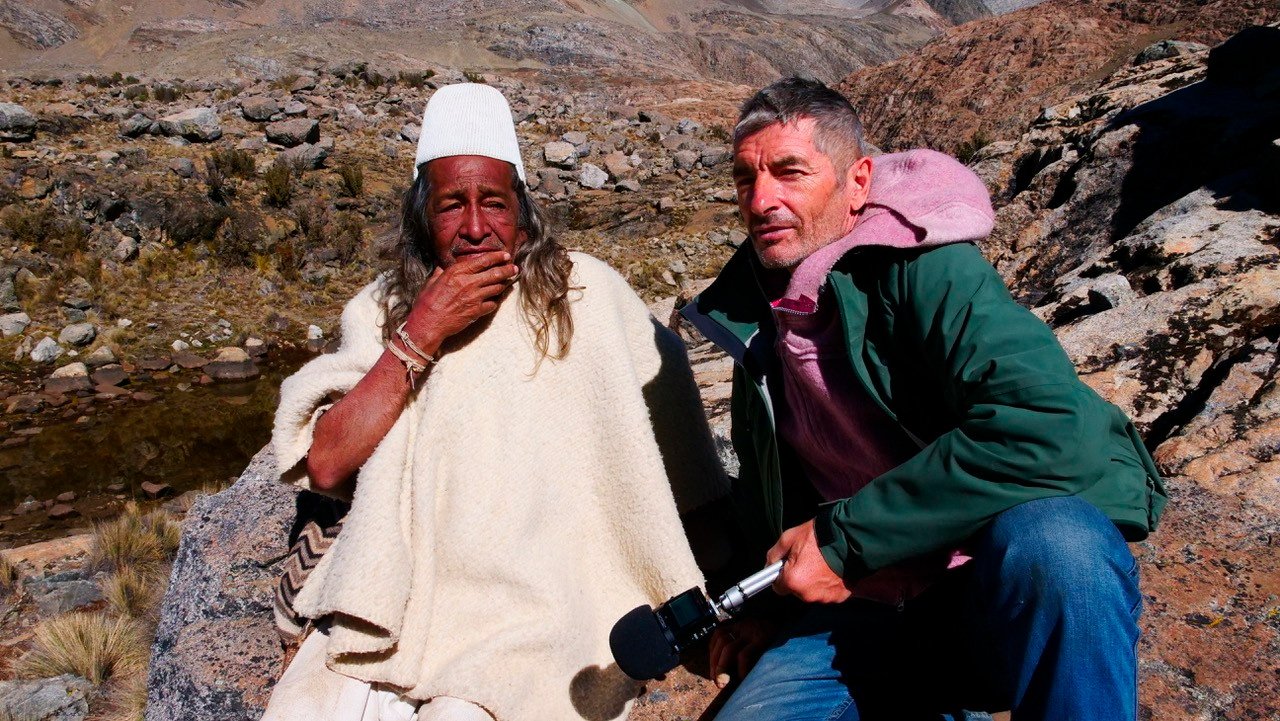
In February 2026, an international team of artists, technicians, and members of the Arhuaco Indigenous people embarks on an extraordinary journey into the sacred mountains of the Sierra Nevada de Santa Marta, Colombia.
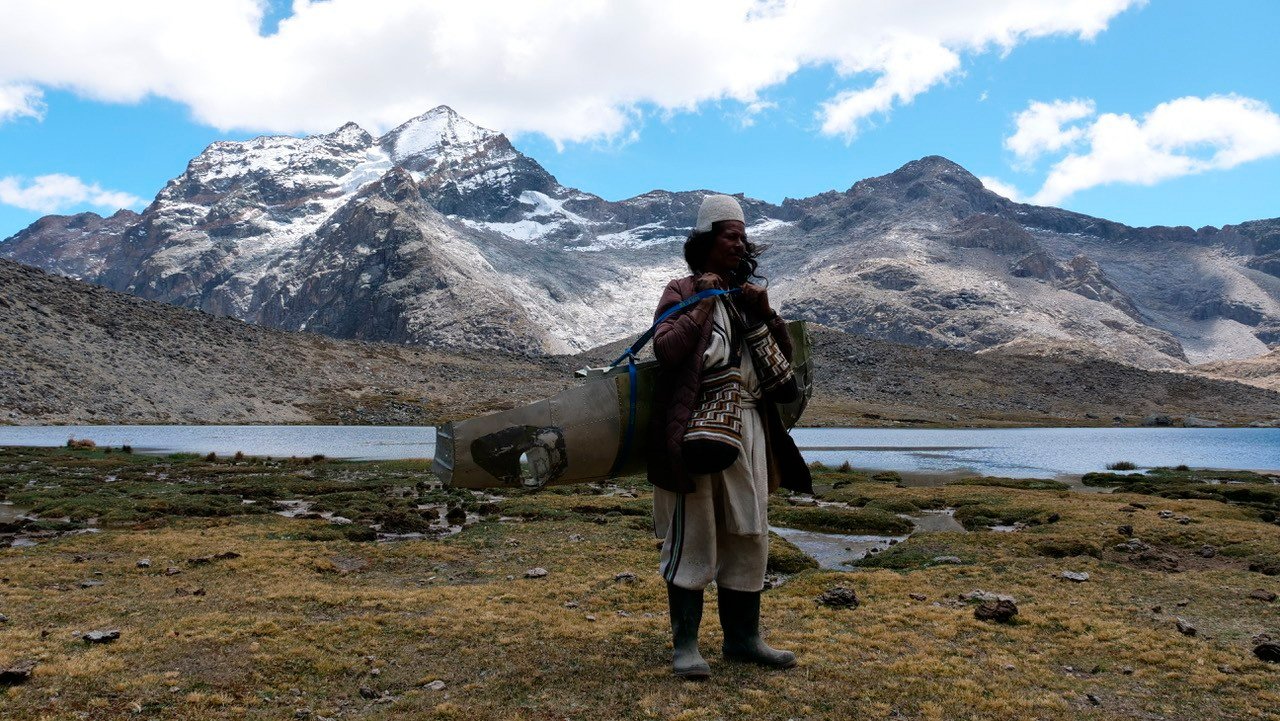
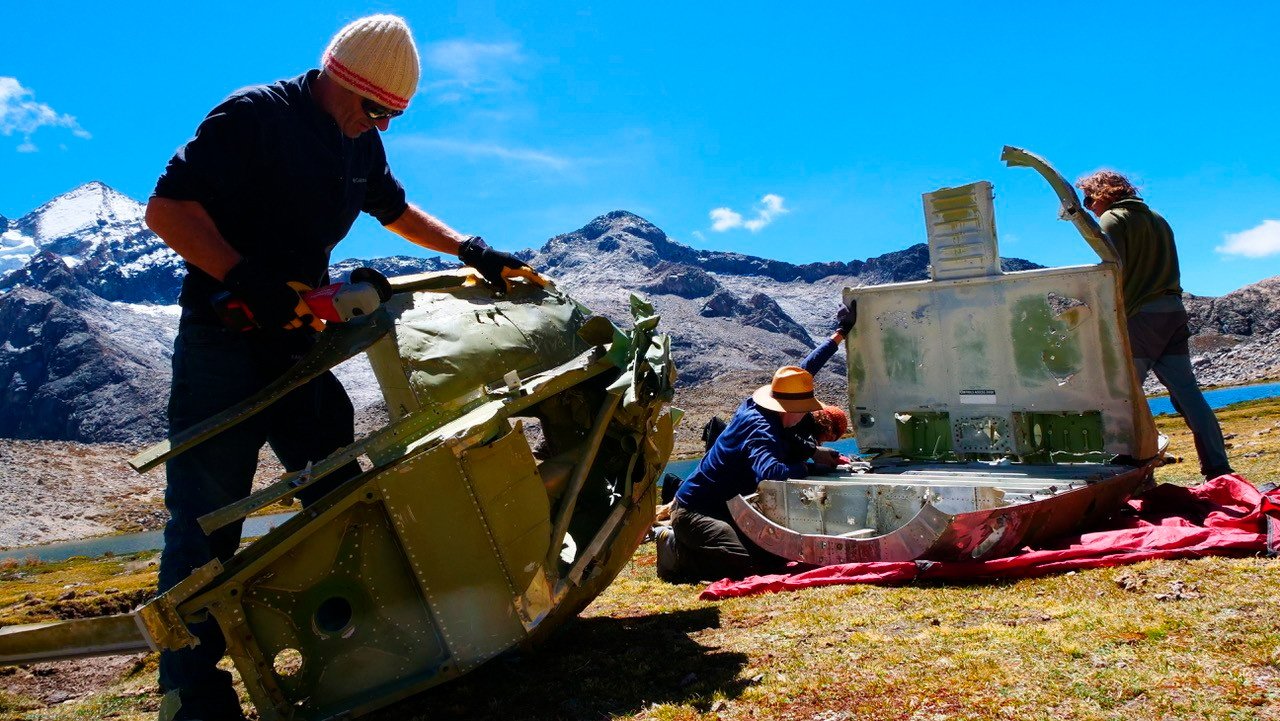
At almost 5,000 meters above sea level, the remains of a helicopter that crashed in 1974 still lie on the shore of Lake Naboba—a foreign object and a lasting disturbance within a territory of profound spiritual significance for the Arhuaco people.
With the approval and accompaniment of the Arhuaco authorities and their spiritual leaders, the Mamos, the expedition undertakes the careful recovery of the helicopter’s aluminum fragments. What begins as a technical task becomes a symbolic process of healing. Through ceremonies and a specially created protected pathway, the remains are respectfully removed from the sacred territory, restoring balance to a relationship altered between human beings and the landscape.
In February 2027, in Santa Marta, the recovered helicopter aluminum becomes the foundation of the artwork HUSO, created by Austrian artist Emmerich Weissenberger. Together with mineralized driftwood from the Sierra Nevada, students from the University of Magdalena, together with Colectivo Yosokwi and the ArtEmbassy Art Collective, create a six-meter-high sculpture under his artistic direction.
The artwork represents peace, reconciliation, ecological and social justice, and creates a future space for dialogue.
When
February 2026
Where
Lake Naboba, Sierra Nevada de Santa Marta
With
Arhuaco traditional authorities and Mamos
Artistic concept
Emmerich Weissenberger
Coordination
Gunzareiman Villafaña Torres, Amado Villafaña Chaparro
Photos
Nora Ruzsics
Gallery
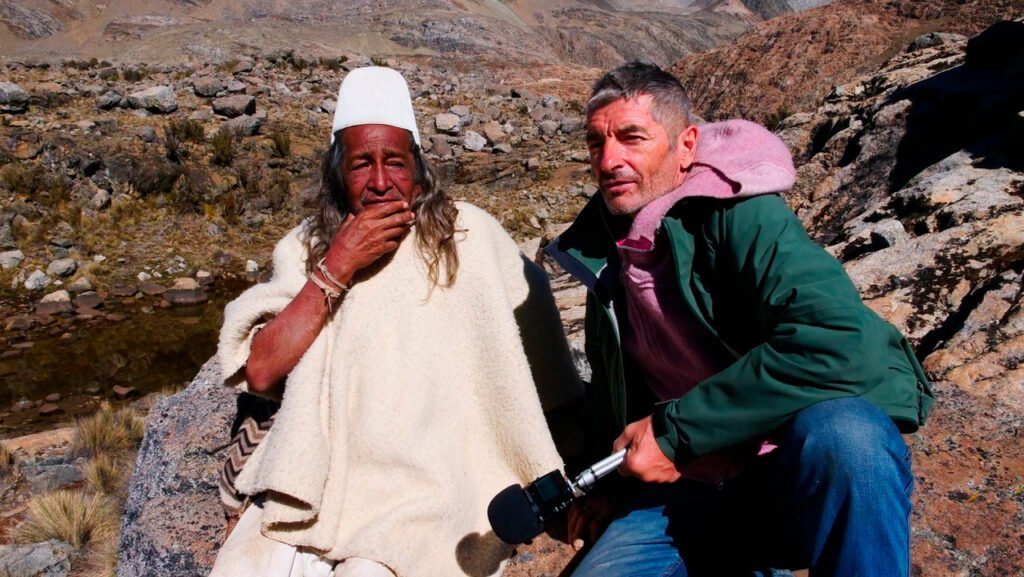
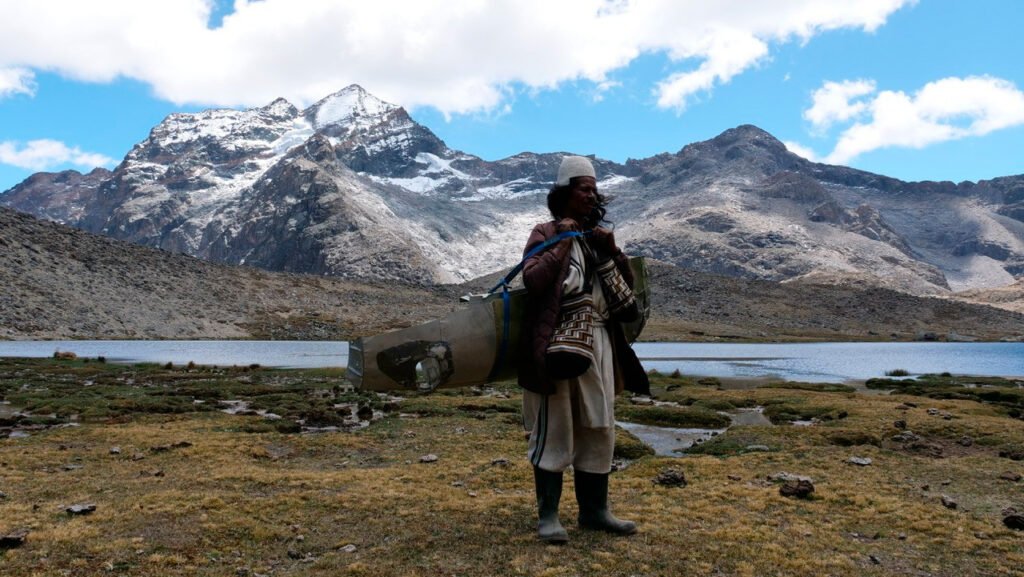
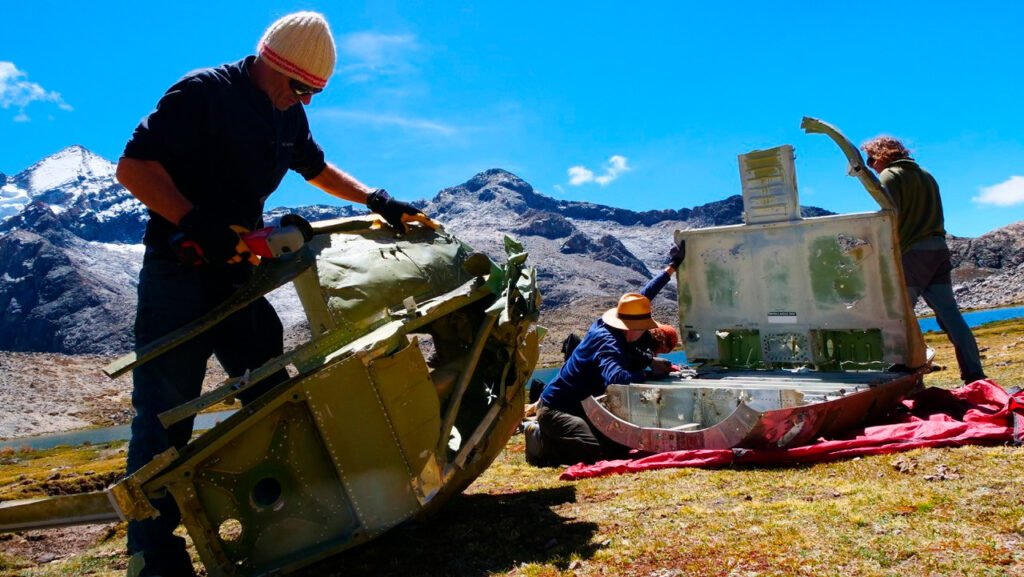
Photos: Nora Ruzsics
The documentary
The documentary follows this unique journey into a remote and challenging environment and captures an encounter between Indigenous knowledge, contemporary art, and international collaboration. It shows how the traces of a past accident can become part of a process of healing, reconciliation, and connection.
 ES
 EN